
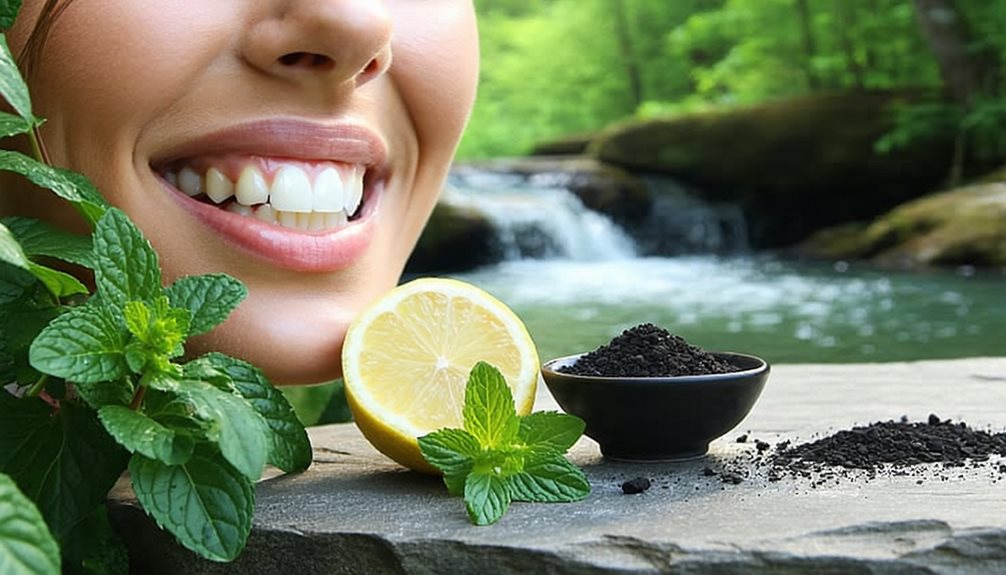
For natural teeth whitening, several evidence-based methods stand out. A combination of baking soda and hydrogen peroxide utilizes a dual-action approach: abrasively removing stains while bleaching discoloration effectively. Oil pulling with coconut oil leverages lauric acid’s antimicrobial properties, promoting oral hygiene when practiced consistently. Additionally, an apple cider vinegar rinse, rich in acetic acid, aids in gradual enamel lightening and bacterial reduction, although dilution is essential to prevent erosion. These methods should be adjuncts to conventional oral hygiene. For those interested in exploring feasible alternatives, further details offer a deeper understanding of their efficacy and application.
Baking Soda and Hydrogen Peroxide
Baking soda and hydrogen peroxide are two common agents used in dental care for their efficacy in teeth whitening. These natural remedies are frequently employed due to their accessibility and the minimal risk they pose when used appropriately.
Sodium bicarbonate, or baking soda, functions as a mild abrasive, facilitating the removal of surface stains from tooth enamel. This mechanical action contributes to an enhanced appearance of dental surfaces, making it a popular choice in at-home teeth whitening solutions.
Hydrogen peroxide, on the other hand, acts as a chemical bleaching agent. It penetrates the outer enamel and initiates an oxidation process that breaks down complex molecules responsible for discoloration. The concentration of hydrogen peroxide in home-use products is typically low to guarantee safety while providing noticeable results over time.
When combined, baking soda and hydrogen peroxide synergistically amplify the teeth whitening process, offering a dual-action approach that addresses both surface stains and deeper discoloration.
Recent studies have further validated the effectiveness of these agents, noting their potential as a cost-effective alternative to professional dental treatments.
With ongoing innovation in natural remedies, baking soda and hydrogen peroxide remain at the forefront of accessible teeth whitening solutions.
Oil Pulling With Coconut Oil
Oil pulling with coconut oil is a traditional oral hygiene practice that has gained attention for its potential teeth whitening benefits. This technique involves swishing a tablespoon of coconut oil in the mouth for approximately 10 to 20 minutes. Proponents suggest that this method may reduce plaque buildup and surface stains, potentially leading to a brighter dental appearance.
The coconut oil benefits are attributed to its lauric acid content, known for its antimicrobial properties, which may decrease oral bacteria and support overall oral health.
The oil pulling technique is simple yet requires consistency for ideal results. Clinically, the act of swishing the oil is thought to enhance mechanical cleansing, aiding in the removal of food particles and debris from the teeth’s surface.
While empirical evidence is limited, some studies have observed reductions in gingivitis and plaque with regular oil pulling, albeit these studies often emphasize the need for further rigorous research.
For individuals seeking innovative and natural approaches to oral care, oil pulling with coconut oil presents a promising adjunctive strategy. However, it is important to integrate this practice with conventional oral hygiene measures such as brushing and flossing to maintain thorough dental health.
Apple Cider Vinegar Rinse
Some individuals consider apple cider vinegar (ACV) as a potential natural remedy for teeth whitening, attributed to its acetic acid content, which may help in removing surface stains. This organic compound in ACV exhibits mild bleaching properties that can contribute to the gradual lightening of dental enamel.
The vinegar benefits extend beyond whitening; it possesses antimicrobial properties that may support oral hygiene by reducing oral bacteria levels.
Clinical evidence regarding the efficacy of apple cider vinegar for teeth whitening is limited.
To utilize apple cider vinegar effectively, it is advised to dilute it with water to mitigate the risk of enamel erosion, a potential side effect of direct exposure to acidic substances. A typical solution involves mixing one part vinegar with two parts water, swishing the mixture for approximately 30 seconds, and subsequently rinsing with plain water.
While innovative and appealing, caution is advised due to the acidic nature of apple cider vinegar. Regular dental evaluations remain paramount to guarantee that any natural remedy complements professional dental care without compromising enamel integrity.
Frequently Asked Questions
How Long Does It Take to See Results With Natural Teeth Whitening Methods?
The results timeline for natural teeth whitening methods varies, often requiring several weeks to observe noticeable changes. Whitening patience is essential, as the efficacy depends on individual habits, enamel condition, and consistent application of the chosen natural approach.
Are Natural Teeth Whitening Methods Safe for Sensitive Teeth?
Natural whitening methods can cause sensitivity reactions in some individuals with sensitive teeth. However, alternative treatments like using lower-concentration agents or incorporating remineralizing agents may mitigate adverse effects, enhancing safety and efficacy for sensitive dental profiles.
Can Natural Whitening Methods Cause Damage to Dental Fillings or Crowns?
Natural whitening methods’ impact on fillings safety and crowns effectiveness varies. Abrasive techniques may damage restorations, while certain chemical agents could influence bonding integrity. Clinicians recommend thorough assessment and tailored approaches to guarantee ideal outcomes without compromising prosthetic stability.
Do Dietary Changes Impact the Effectiveness of Natural Teeth Whitening?
Dietary impacts considerably influence the efficacy of natural teeth whitening. Incorporating whitening foods, such as strawberries and pineapple, may enhance results. Conversely, avoiding staining substances like coffee and red wine is essential for ideal whitening outcomes.
Are There Any Natural Remedies That Can Prevent Tooth Discoloration?
To prevent tooth discoloration, incorporating natural ingredients such as baking soda and coconut oil into oral hygiene practices can be beneficial. Evidence suggests that these substances may help maintain enamel integrity and reduce surface stains.
Conclusion
In conclusion, the utilization of baking soda combined with hydrogen peroxide, oil pulling with coconut oil, and rinsing with apple cider vinegar represents effective, natural methodologies for dental whitening. These methods leverage the chemical properties of each substance to combat extrinsic tooth discoloration, as supported by emerging evidence. While these approaches may offer a safe alternative to conventional whitening treatments, further empirical research is warranted to establish ideal protocols and guarantee long-term efficacy and safety in dental care practices.

